
 Product 8.1
 Distributed Energy Management System: Tools for electrical distribution networks
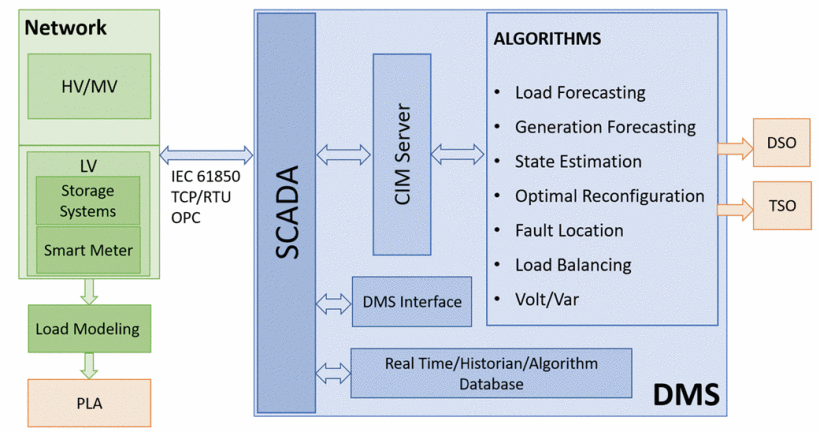
The main aim of the project was the development of a Distributed Management System (DMS) for electrical distribution networks, designed to be integrated into existing SCADA (Supervisory Control and Data Acquisition) systems. The electric network consisted of MV and LV distribution systems, renewable generation, smart meters, and storage systems.
The advanced DMS provided application functions capable of monitoring the state of the distribution networks based on measurements from smart meters and pseudo-measurements derived from AI-based tools. It performed load-flow calculations, evaluated the security of operating points, and suggested guidelines for operational improvements.
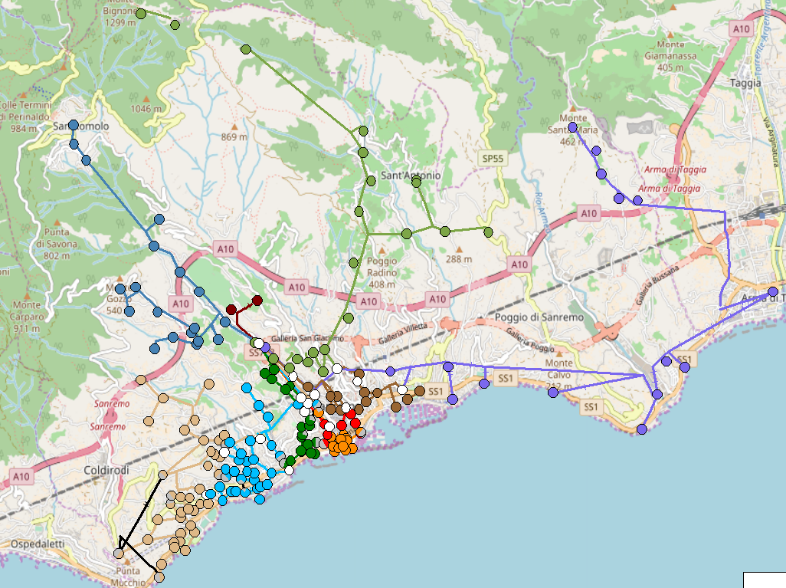
The DMS and all its advanced functionalities developed within the project were tested on the MV distribution system (15 kV) of Sanremo (Italy), managed by DEA SpA. The radial distribution grid under test covered urban and rural areas and was characterized by the following main features:
Approximately 30,000 users supplied, including 27,000 residential users, 3,000 other users, and 15 industrial buildings, among which a hospital, a casino, a water treatment plant, and an aqueduct.
- HV/MV primary substation (132/15 kV);
- MV lines consisting of both cables and overhead lines, with a total length of about 115 km;
- 10 MV feeders operated radially (4 monitored thanks to the installations and actions of this project);
- 200 MV/LV (15/0.4 kV) substations (90 monitored);
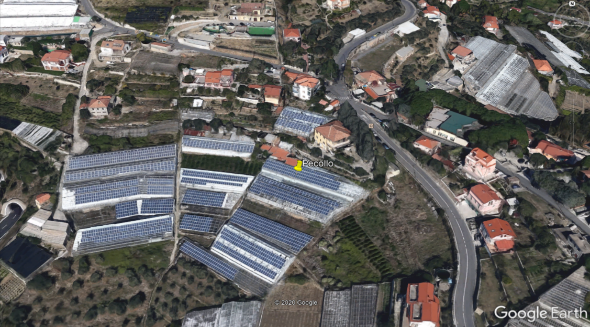
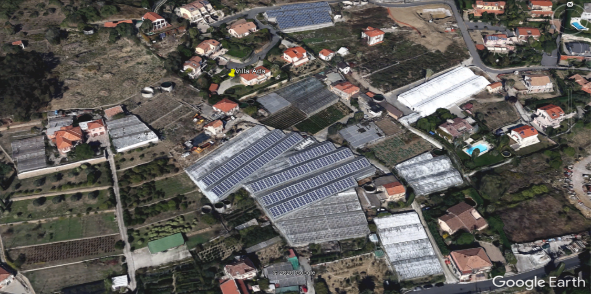
- 2 MV PV plants with nominal power of 470 kW and 200 kW. In addition, 130 other PV plants were present (10 with nominal power between 10 kW and 100 kW, connected to the LV grid; several small PV plants with nominal power below 6 kW, belonging to domestic users);
- Approximately 30,000 users supplied, including 27,000 residential users, 3,000 other users, and 15 industrial buildings, among which a hospital, a casino, a water treatment plant, and an aqueduct.
The strategic goal of the project was to integrate advanced methods, components, and devices capable of leveraging data from smart and power meters to enable more efficient management of distribution networks, the provision of innovative services, and better integration between Distribution System Operators (DSOs) and Transmission System Operators (TSOs). The tools and strategies developed were intended for three main actors:
- DSO: Benefiting from the implementation of control algorithms for optimizing distribution network operations. Furthermore, the integration of DMS functionalities with real-time measurements led to increased efficiency in demand and production management.
- TSO: Through the collection of information provided by the DSO and subsequent data analysis, the TSO can gain improved network observability and significant operational support. Crucial information for the TSO included load and generation forecasts.
- Load Aggregator (LA) and Energy Community (EC): Active management and aggregation of distributed resources were fundamental for providing ancillary services to the grid within the context of developing autonomous energy communities. In particular, the energy community manager was able to collect and leverage available information—such as historical, current, and forecast load and production profiles—to efficiently manage power flows within the energy community and coordinate interactions with the DSO, TSO, and retailers.
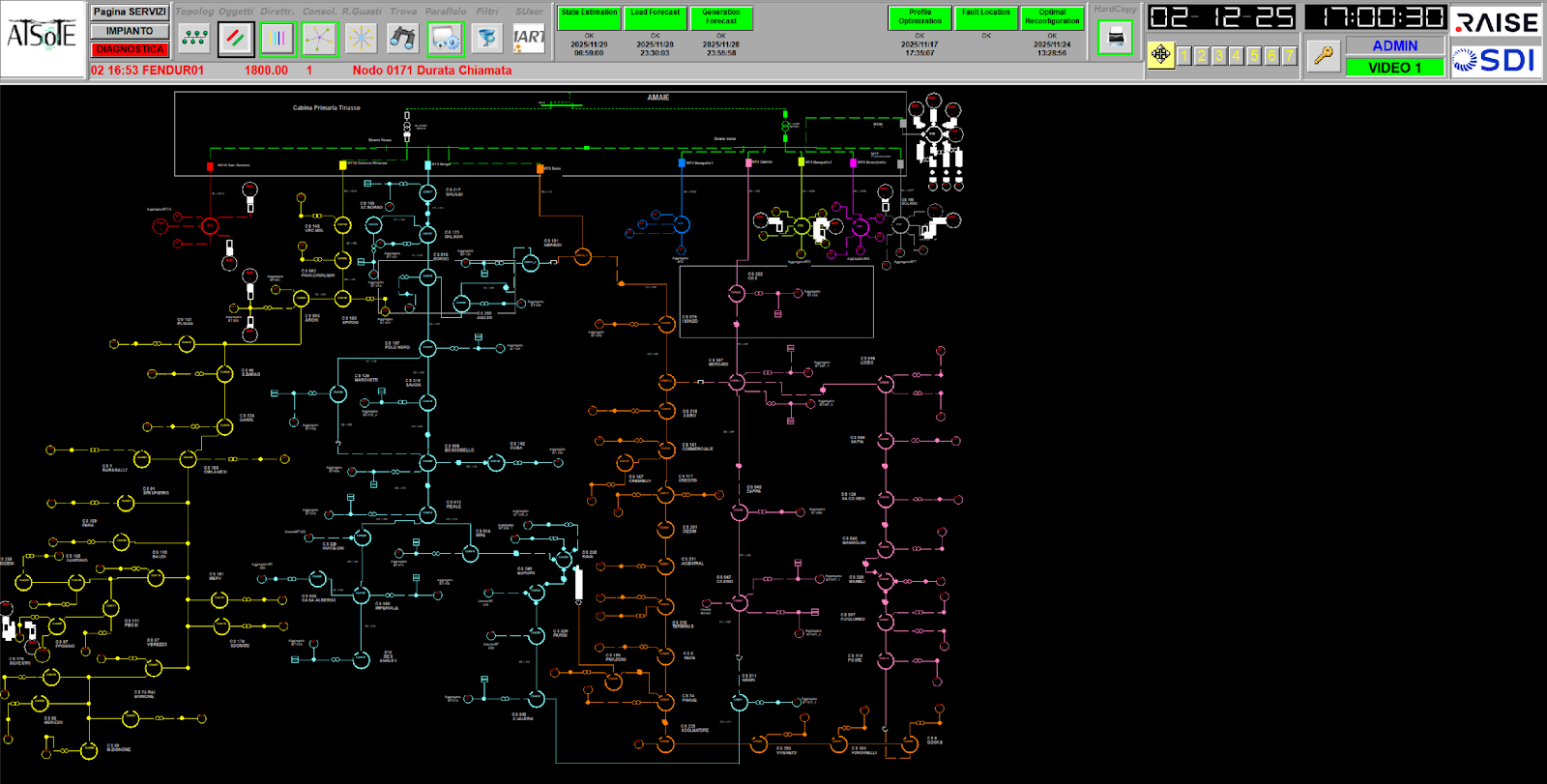
The project built an experimental DMS integrated with the standard monitoring and control tools of the above-mentioned DSO (DEA SpA), incorporating advanced algorithms and key modules for managing active distribution networks and energy communities. Data from the field (smart and power meters) were stored in a dedicated database. These measurements were used for load modeling analysis and load aggregation strategies. This dataset was also utilized for the design and implementation of demand response and flexibility provision methodologies.
The DMS has been equipped with the following advanced functionalities:
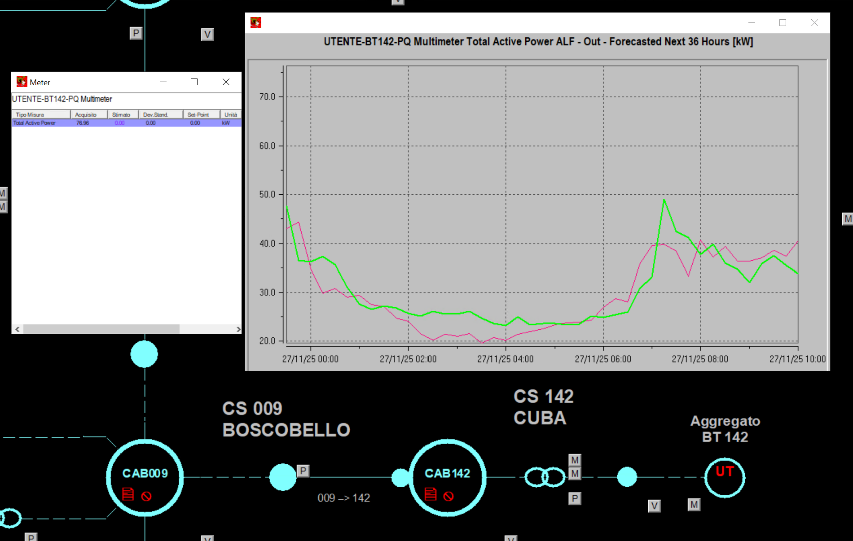
- Load Forecasting: : A technique for load forecasting has been defined and implemented using a hybrid approach that combines an ensemble of artificial neural networks with the ARIMAX (AutoRegressive Integrated Moving Average with Exogenous variables) methodology. The proposed technique accurately predicts the load for the next 36 hours. This procedure has been validated using experimental data from the monitored Medium Voltage (MV)/Low Voltage (LV) substations of the Sanremo network.
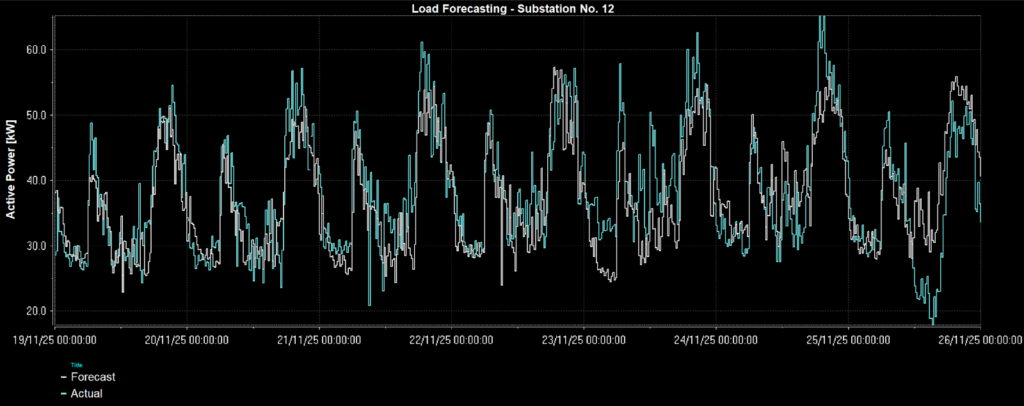
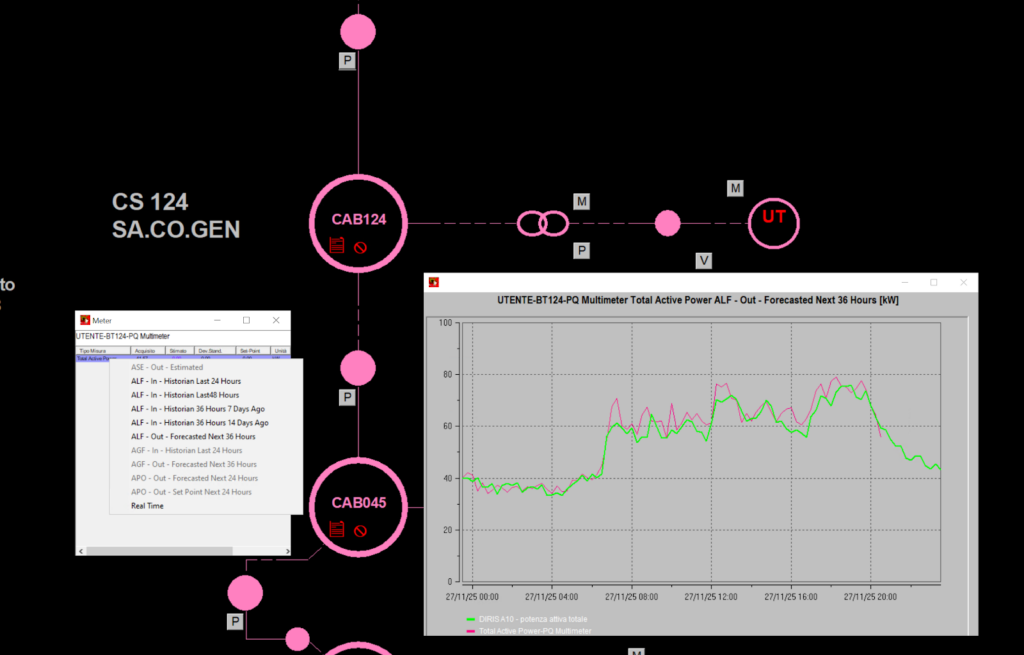
- PV Forecasting: A technique for forecasting the electricity production of photovoltaic (PV) plants has been defined and implemented using a hybrid approach. The proposed method accurately predicts generation for the next 36 hours. Specifically, it leverages either clear-sky models or an ensemble of artificial neural networks combined with the ARIMAX methodology, depending on day-ahead weather forecasts. The selection among these techniques is performed through a decision-tree approach designed to identify the most suitable method. The proposed methodology has been validated on real PV plants within the Sanremo grid, yielding very promising results.
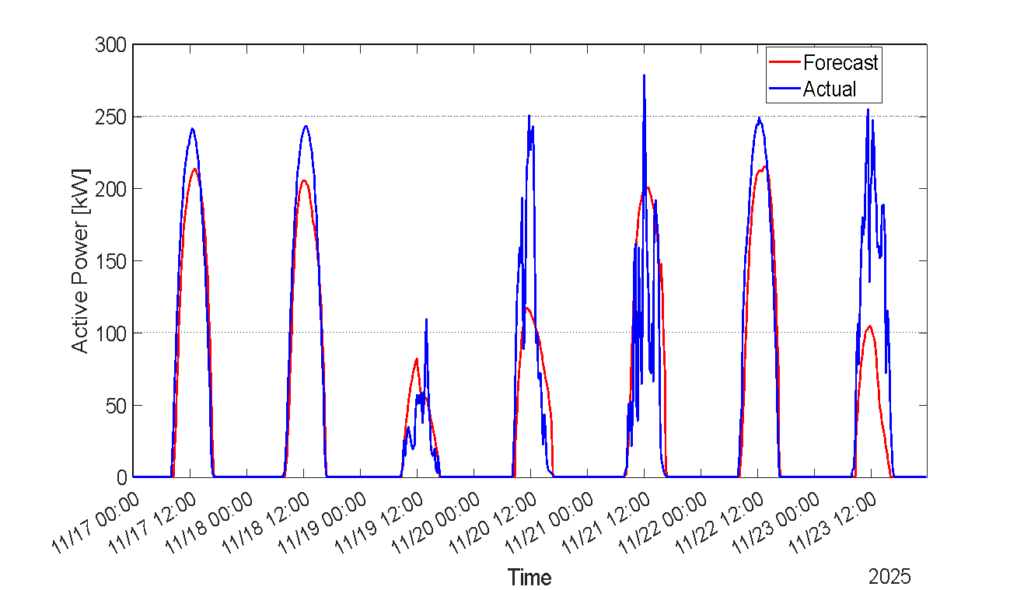
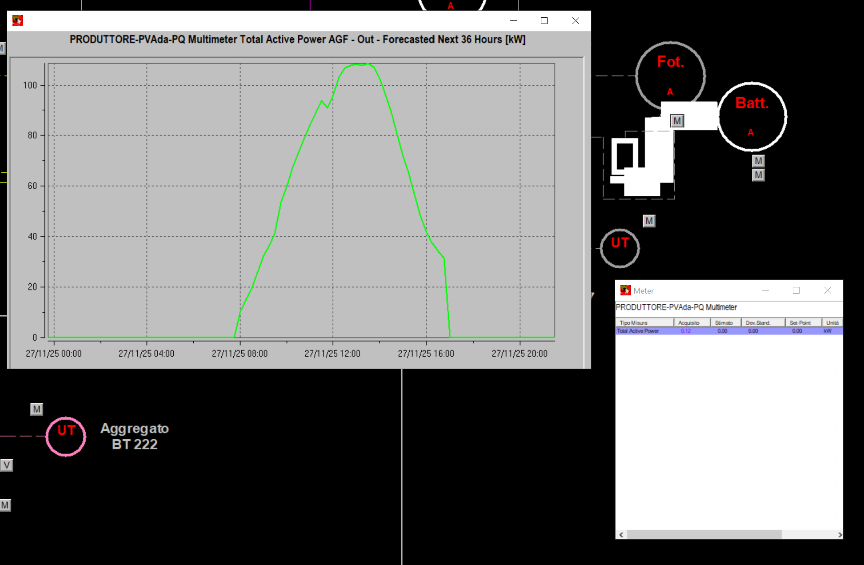
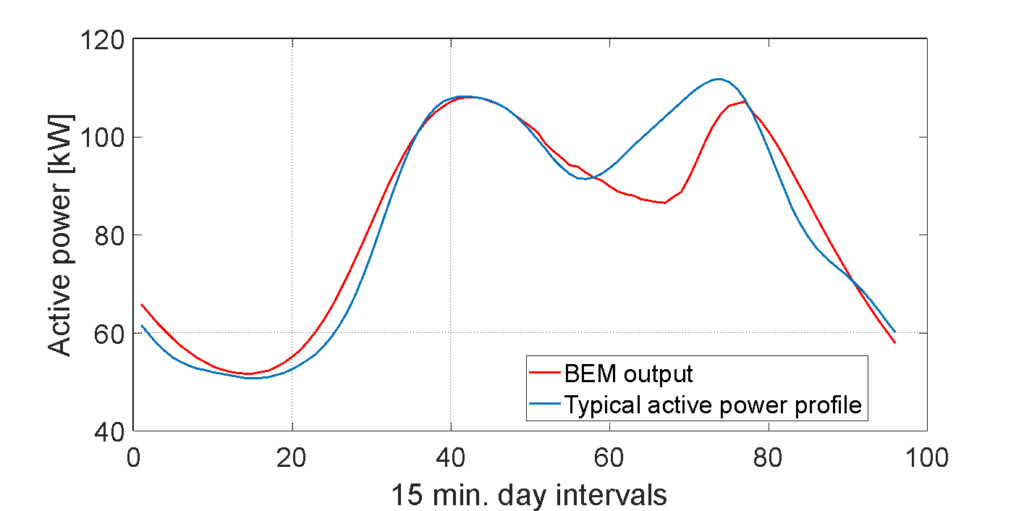
- Load Modeling: An AI-based technique leveraging an ensemble of artificial neural networks, a KNN (K-Nearest Neighbors) approach, field measurement data, and customer-related information has been defined and implemented. The proposed procedure generates typical MV/LV substation load profiles by identifying correlations between aggregated patterns and customer types. It employs ANNs coupled with Fourier decomposition and has been tested and validated using real field data to model the aggregated load patterns of the monitored MV/LV substations of the Sanremo network.
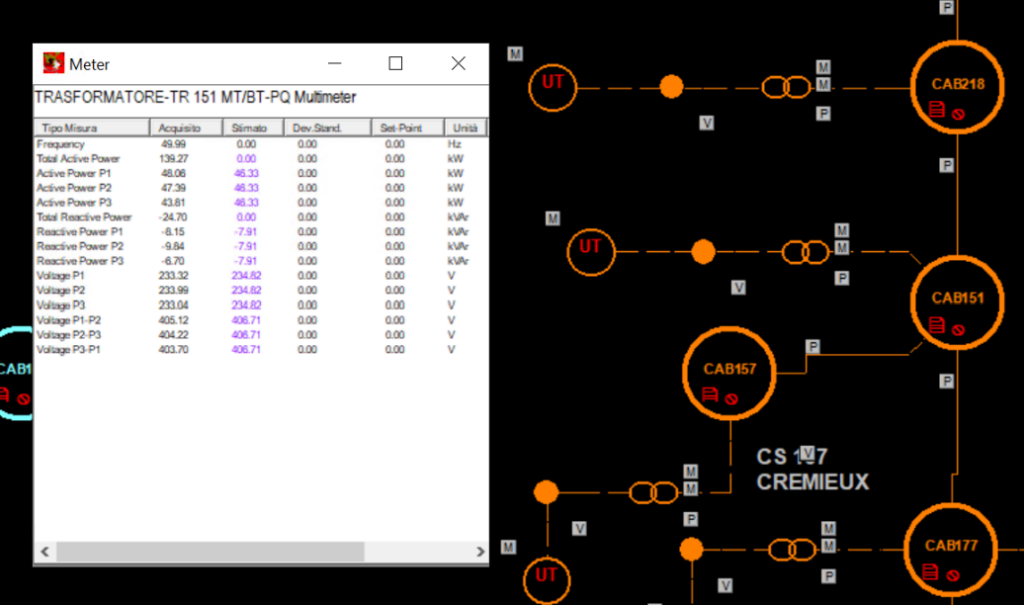
- State Estimation: Procedure based on the Weighted Least Squares method. This functionality incorporates bad data detection techniques and the load modeling algorithm for the generation of pseudo-measurements, which are necessary to ensure network observability. The procedure has been tested on a portion of the Sanremo network (three distribution feeders).
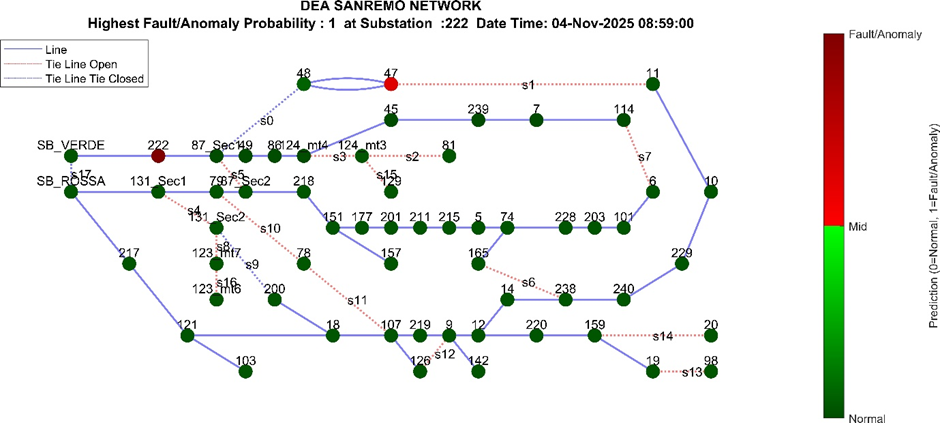
- Fault Location: An AI-based technique has been developed and implemented for fault location within the experimental DMS. This methodology is based on a two-level eXtreme Gradient Boosting (XGBoost) architecture and DIgSILENT PowerFactory simulations. The first level classifies faults into four categories: three-phase, double-phase, double-phase-to-ground, and single-phase-to-ground faults. The second level uses sequence voltage magnitudes and angles, along with the fault type identified in the first level, to predict the fault location while accounting for changes in system topology. The procedure has been tested on a portion of the Sanremo network (three feeders fully involved, with some interactions with the others).
- Optimal Reconfiguration: An AI-based technique for optimal reconfiguration of distribution networks has been implemented within the experimental DMS. This model is a multi-agent deep Q-network with Centralized Training and Decentralized Execution (CTDE), trained to minimize system losses, reduce the Momentary Average Interruption Index (MAIFI), reduce switching operations while respecting bus voltage limits, line loading and maintain radial topology of the distribution system. The procedure has been tested on a portion of the Sanremo network (three feeders fully involved, with some interactions with the others).
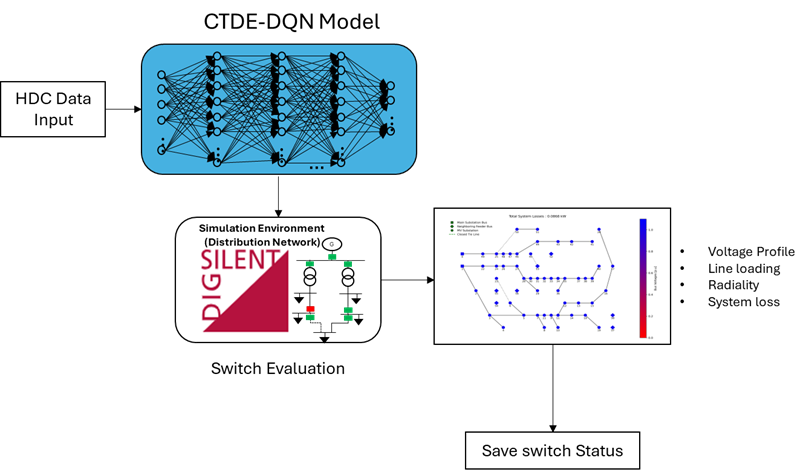
- Microgrid and energy community optimization: An optimization algorithm based on a mixed-integer programming formulation was implemented. The proposed procedure is capable of optimizing the energy management of a microgrid or energy community, taking into account both the provision of flexibility to the grid and the maximization of potential incentives related to energy communities
The full integration of the developed DMS with the SCADA system allows monitoring, managing, and controlling distribution networks at medium and low voltage levels. In this project, the SCADA communicated with the grid using standard protocols (e.g., IEC 61850, Modbus TCP/IP, and Open Communication Platform (OPC)).
The following video presents a demo of the experimental DMS implemented in this project.