 Product 1.5
 Early warning system for gelatinous zooplankton detection and classification in touristic coastal areas
The occurrence of massive patches of jellyfish or other gelatinous zooplankton species is extremely difficult to predict. Nevertheless, the large-scale presence of these organisms can create significant problems for tourism or commercial activities related to fisheries. For this reason, an early-warning system has been developed to detect high concentrations of gelatinous organisms and predict their potential movement toward sensitive areas such as crowded beaches, bathing zones, diving sites, or fishing grounds.
The system consists of one or more intelligent imaging devices deployed near areas of interest, along with one or more smart buoys that acquire physical, biochemical, and meteorological parameters from both the water column and the atmosphere. It also includes an oceanographic model for tracking waterborne particles and a decision-support component that integrates data from the various system elements, issuing an alert in the event of an impending influx of gelatinous organisms.
Specifically, the imaging devices detect the massive presence of gelatinous organisms and transmit this information to the decision-support system. The decision-support system then activates the oceanographic model, providing as input the geolocation of the organisms, the number of individuals identified, and the metocean conditions collected by the smart buoys. The oceanographic model generates a forecast of the organisms trajectory in the hours following detection; if the trajectory suggests an impact with a tourist or commercial zone, an alert is issued.
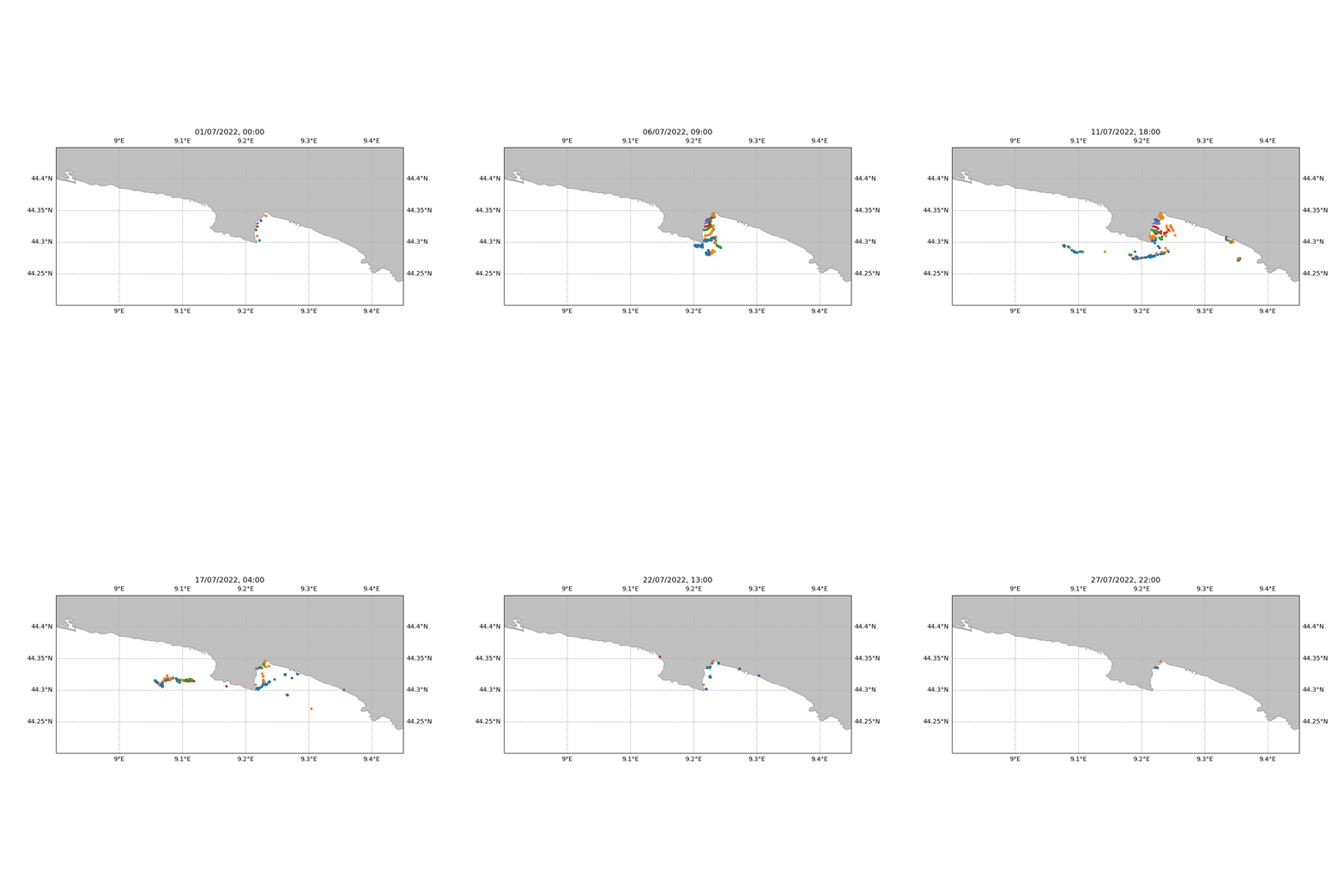
The area selected for testing the early-warning system is the Portofino Marine Protected Area (Genoa, Italy), chosen for its touristic relevance and proximity to crowded beaches. For the prototype demonstration, an imaging system and several smart buoys were deployed, and an oceanographic model capable of predicting the trajectories of detected gelatinous organisms was developed.
The image below shows several examples of automatic recognition of gelatinous zooplankton performed by the GUARD-1 intelligent imaging device used in the project. The images have been acquired during a bloom of Ctenophora in a mussel farm in the Gulf of La Spezia
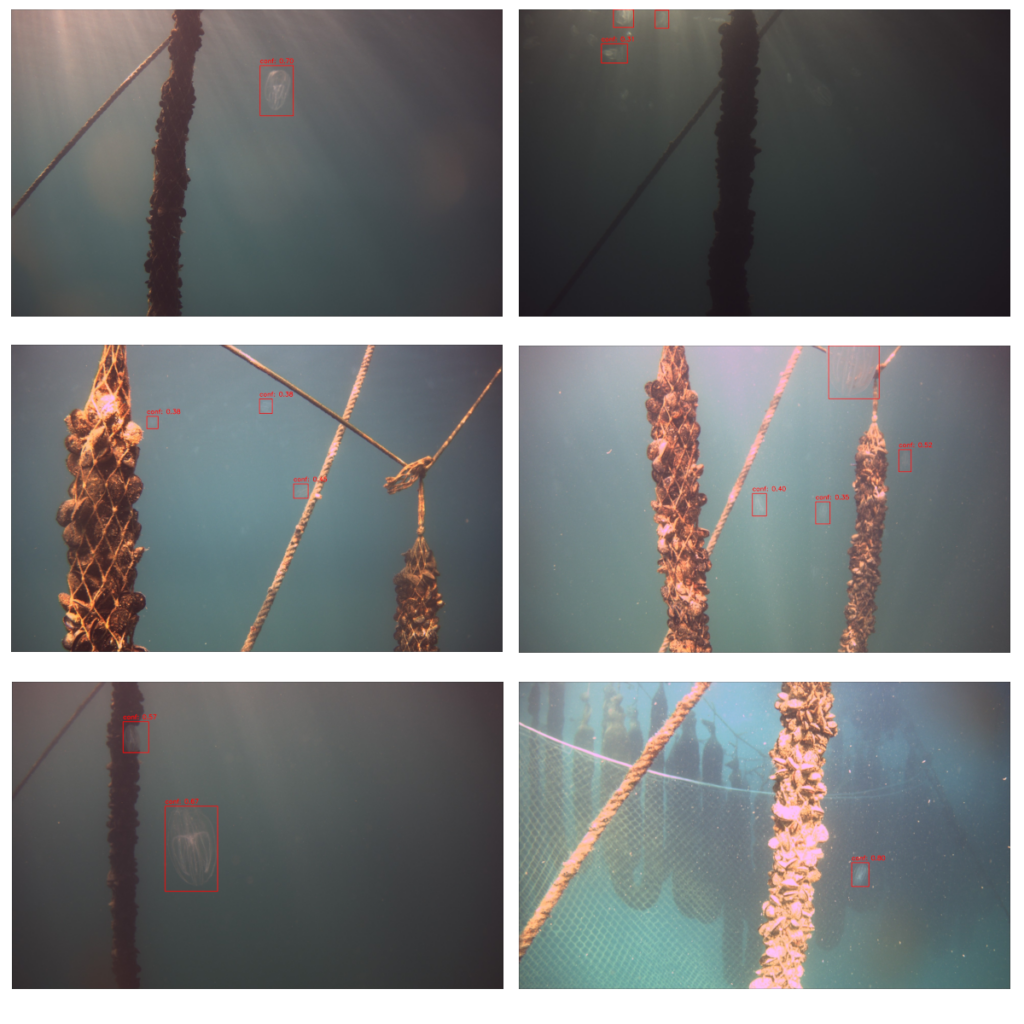
The image shows several examples of automatic recognition of gelatinous zooplankton performed by the GUARD-1 intelligent imaging device used in the project. The images have been acquired during a bloom of Ctenophora in a mussel farm in the Gulf of La Speziaw the smart buoys used for the development of the early warning system
By applying machine learning algorithms to the collected data, VS-AAI aims at identifying and interpreting various underwater phenomena, including anthropic activities such as ship passages, natural events like internal sea waves, and biological sounds such as marine mammal vocalizations. This system thus represents a powerful tool for environmental monitoring, marine research, and ecosystem protection.
Further details about the design and construction of the underwater housing—featuring both sensors—are available through the [link provided], where images and diagrams illustrate the system’s innovative architecture.
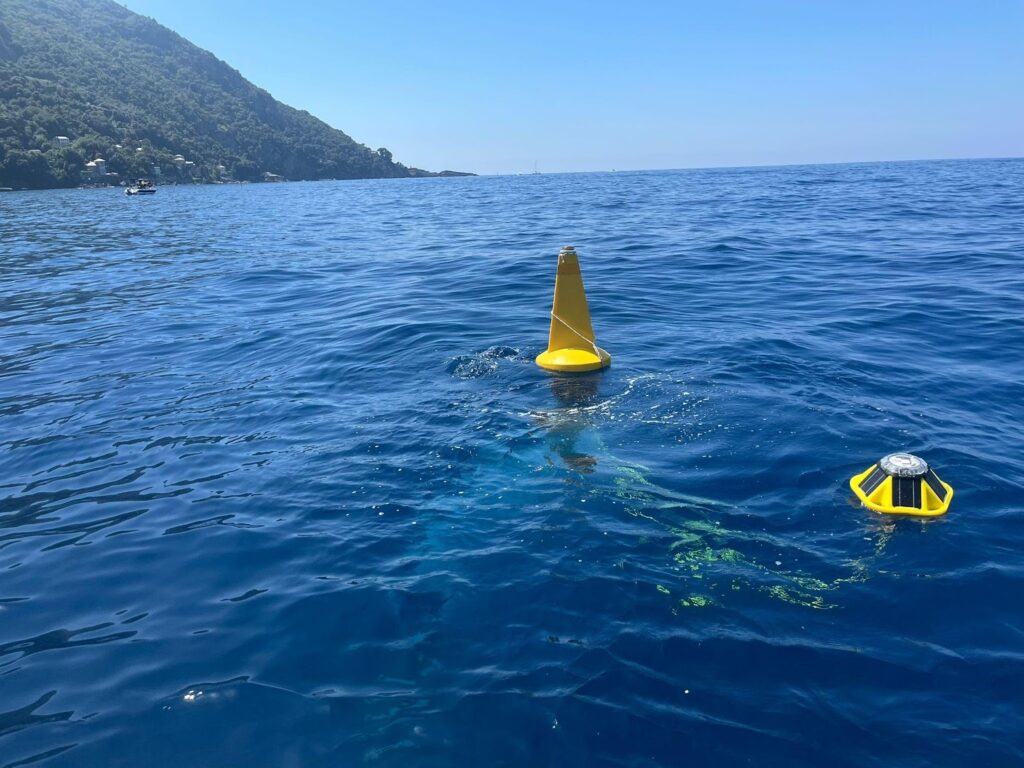
The images show the smart buoys used for the development of the early warning system