
 Product 1.6
 Early warning system for nectonic biomass flows in coastal marine areas with strong mussel farming activity
Mussel farms provide a high-quality food source with excellent environmental sustainability. Mussels do not require artificial feeding, and the growth of their shells helps absorb dissolved CO₂ from the water—and ultimately from the atmosphere—contributing to the mitigation of human-driven climate change. Moreover, the presence of these farms enhances ecosystem biodiversity by creating a varied habitat rich in different organisms.
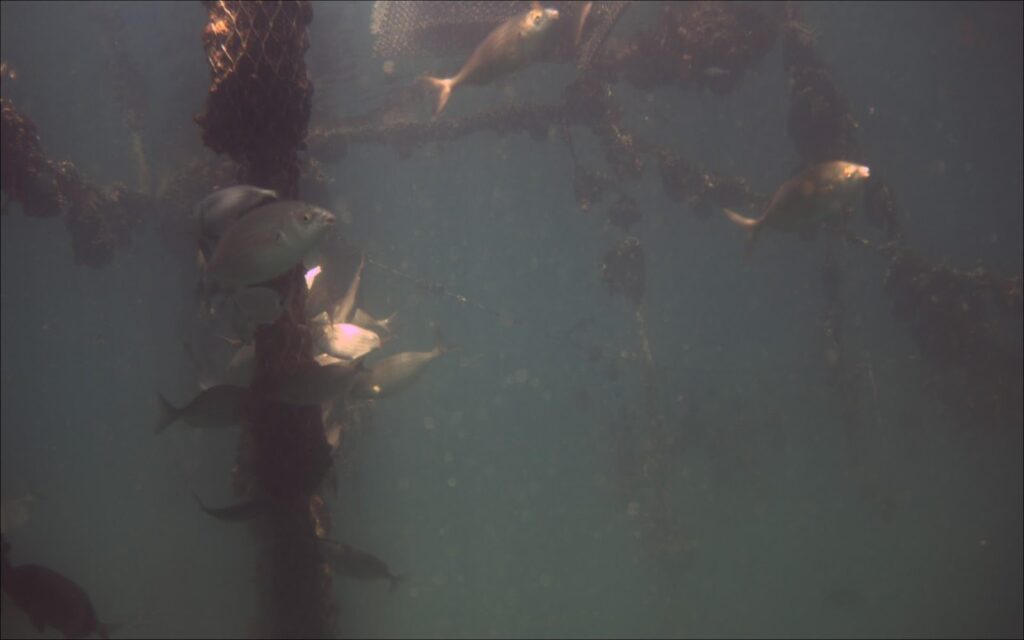
The aim of this project activity is to study biodiversity within mussel farms, with a particular focus on monitoring species that may become harmful to mussel cultivation. For instance, certain fish species—such as Sparus aurata—can prey on mussels. For this reason, it is important to track their abundance across seasons and understand the environmental conditions that trigger harmful behaviours.
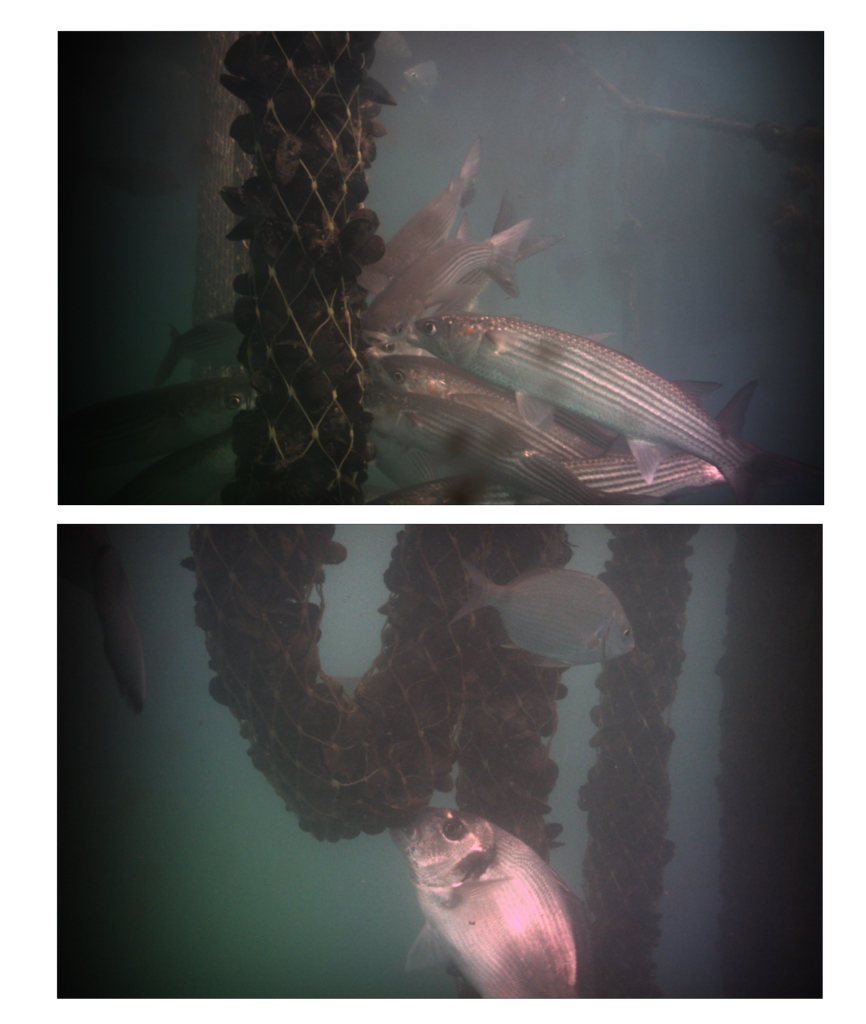
An example of the different behaviours occurring within the mussel farm is shown in the following image
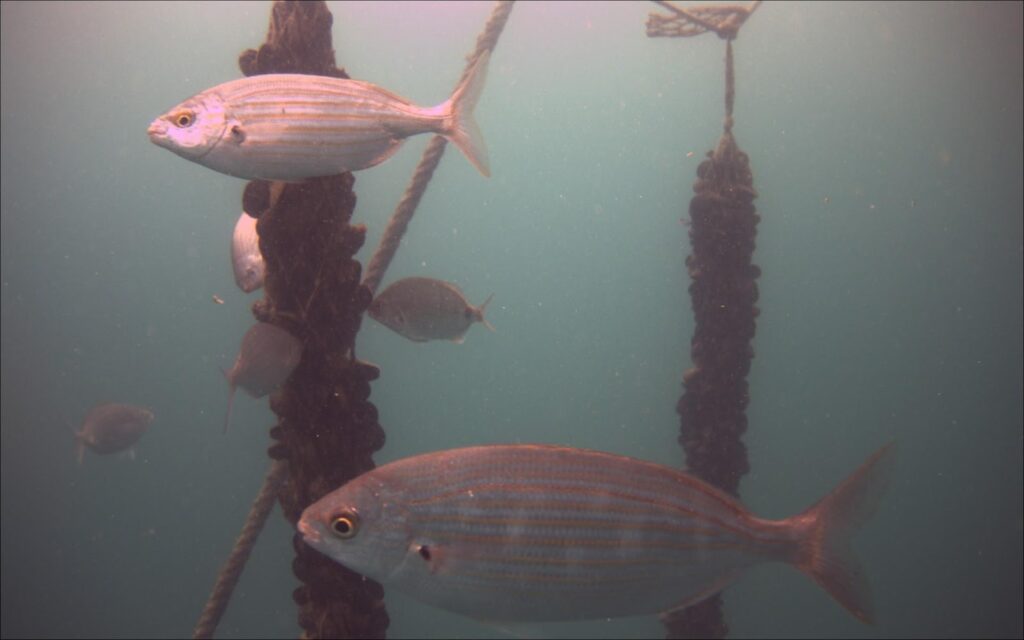
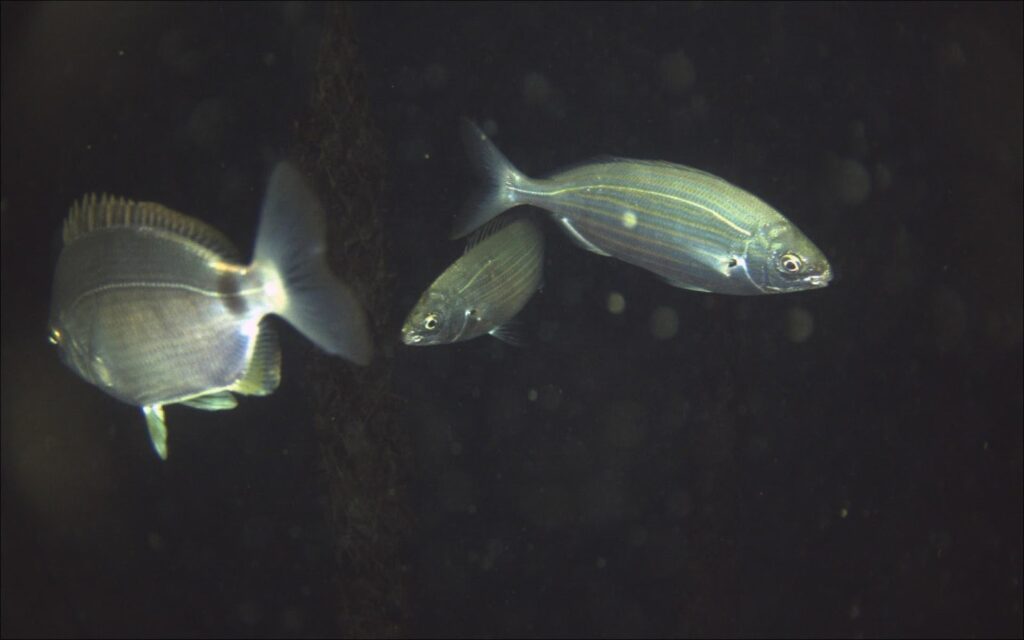
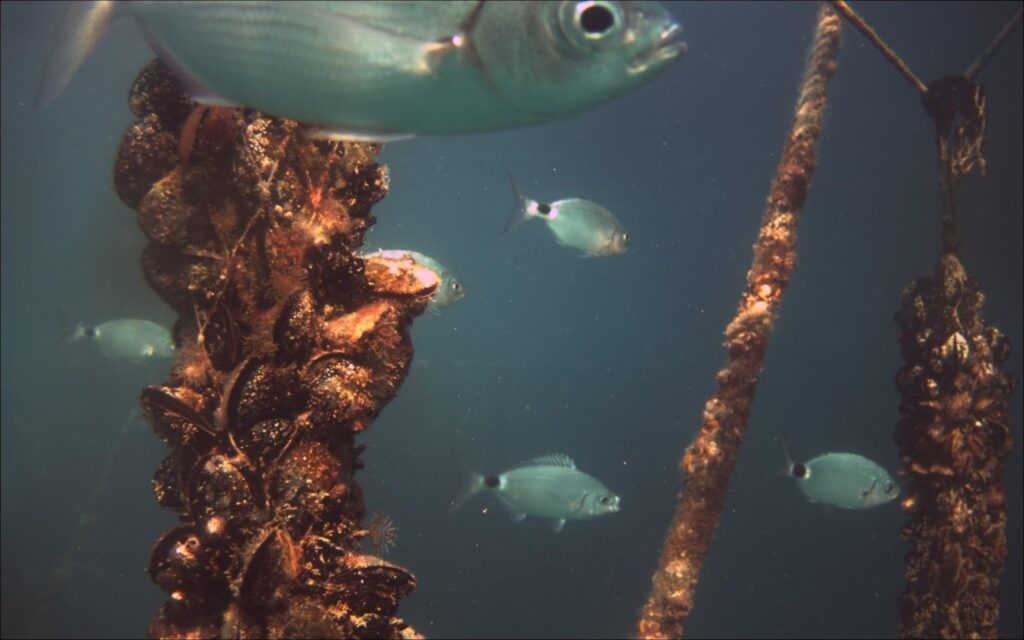
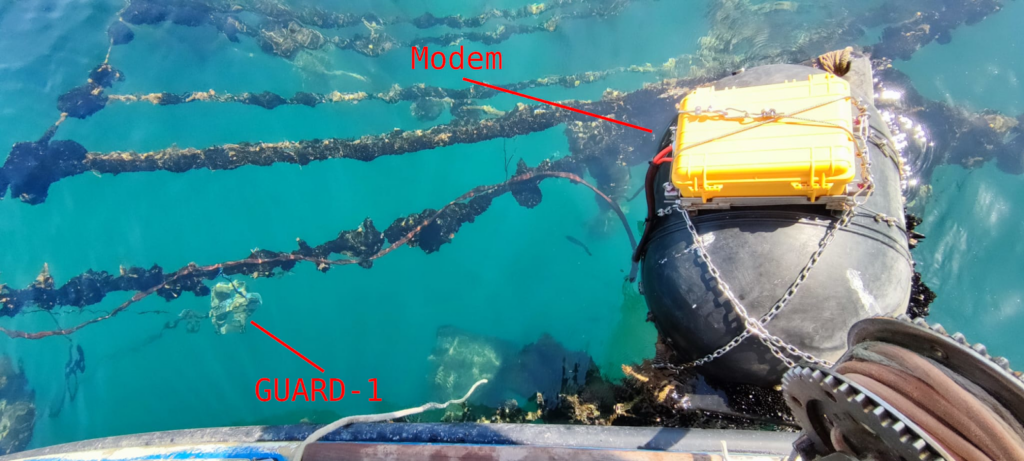
The observing system consists of one or more autonomous intelligent imaging devices (GUARD1), developed using the technology described in European Patent EP 2863257 B1 – ‘Underwater images acquisition and processing system’.
These devices are programmed to continuously capture images, both day and night. They run dedicated onboard image-processing algorithms designed to detect and classify fish species, and they include communication modules that transmit the relevant information extracted from the acquired images—for example, images containing fish specimens and/or time series describing the abundance of the detected species.
In addition to the GUARD-1 image acquisition and processing system, the mussel farm is equipped with a real-time Internet of Underwater Things (IoUT) network that integrates physical and biochemical sensors. This network collects hourly measurements of temperature, dissolved oxygen, pH, conductivity, turbidity, chlorophyll, current velocity, and pCO₂.
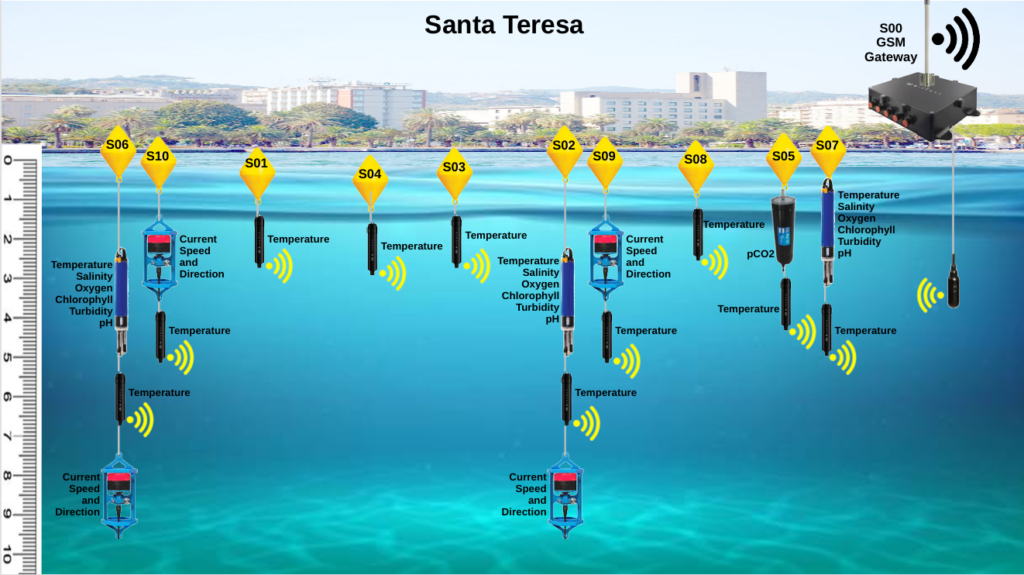
These data, combined with the fish-abundance time series automatically generated by the GUARD-1 devices, are used to investigate biodiversity patterns and behavioural dynamics within the mussel farm.